 As a result of the many years of effective cooperation between the International Kurash Institute and the Pan-American Kurash Confederation, regular online and offline seminar-training sessions have been conducted to increase the popularity of Kurash in countries across the ocean, widely promote its unified international rules, and improve the qualifications of coaches and referees ahead of major Kurash competitions.
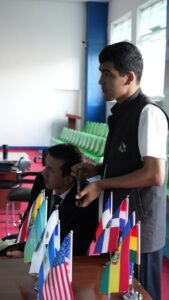 Taking into account the time differences between regions, the training sessions are being conducted by the institute’s experts from early morning according to a specially designed schedule to ensure convenience for participants.
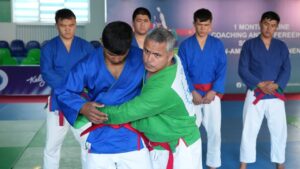
 In the practical section, institute instructor Shukhrat Kurbonov remotely demonstrated technical movements belonging to the “Bardor” group of Kurash techniques and provided detailed explanations of the rules for their execution.
_______________________________________________________________________
¡EL KURASH NO CONOCE FRONTERAS!
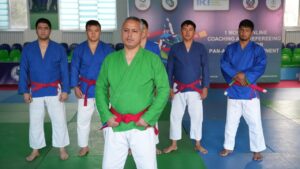 Gracias a los años de fructífera colaboración entre el Instituto Internacional de Kurash y la Confederación Panamericana de Kurash, se han llevado a cabo regularmente seminarios y sesiones de capacitación, tanto presenciales como en línea, para aumentar la popularidad del Kurash en países de todo el mundo, promover ampliamente su reglamento internacional unificado y mejorar la cualificación de entrenadores y árbitros de cara a las principales competiciones de Kurash.
 El curso intensivo en línea de un mes de duración que se está impartiendo actualmente ha sido organizado por el Instituto Internacional de Kurash en colaboración con la Asociación Internacional de Kurash y la Confederación Panamericana de Kurash.
Teniendo en cuenta las diferencias horarias entre regiones, las sesiones de capacitación son impartidas por expertos del instituto desde primera hora de la mañana, siguiendo un horario especialmente diseñado para garantizar la comodidad de los participantes.
 Durante la última jornada del curso, se abordaron varios temas importantes. En particular, Komil Mukhammadiev, vicerrector del Instituto Internacional de Kurash, impartió una conferencia sobre la terminología del Kurash, los estándares internacionales para el Yaktak (uniforme) de Kurash, los requisitos que se le imponen y las especificaciones técnicas del equipamiento necesario para este deporte.
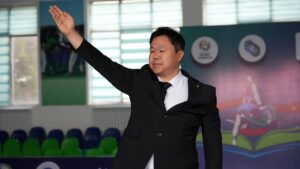
 El profesor Kim Eurjoong, jefe del Departamento de Educación del Instituto Internacional de Kurash, impartió clases sobre las reglas de arbitraje en Kurash y los criterios para evaluar las competiciones.
En la parte práctica, el instructor del instituto, Shukhrat Kurbonov, realizó una demostración remota de movimientos técnicos pertenecientes al grupo de técnicas «Bardor» de Kurash y proporcionó explicaciones detalladas de las reglas para su ejecución.
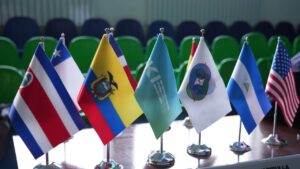
Más de 40 especialistas de casi 15 países —entre ellos Estados Unidos, México, Colombia, Chile, Costa Rica, Nicaragua, Guatemala, Panamá, República Dominicana, Bolivia y Ecuador— participan activamente en estas sesiones organizadas a través de la plataforma Zoom.